 (Image source: Gemini)
 Remember 2020? We all thought remote work was a temporary band-aid, a necessary evil to survive a global crisis. Fast forward to 2026, and the picture is completely different. The shift away from the office isn't just a flexibility perk anymore; it's a permanent economic lever, fundamentally reshaping the geography of money and life in America. This isn't just about escaping high rents in Manhattan or San Francisco. It's about a quiet, powerful dispersal of wealth and high-earning individuals into places that were never built to handle them: your local suburbs and the small cities you might visit on vacation.
The initial exodus was chaotic, but the current stability is what matters. The share of days worked from home has stabilized around 27% in the US, a massive jump from the pre-pandemic rate of about 5%.¹ This permanent demographic shift is creating a “hidden impact.” It’s altering the economic and social fabric of smaller, non-metro areas, creating winners, losers, and a lot of municipal headaches. We need to talk about what this means for housing, your favorite local businesses, and how your town actually funds itself.
Affordability vs. Influx in Suburbia and Small Towns
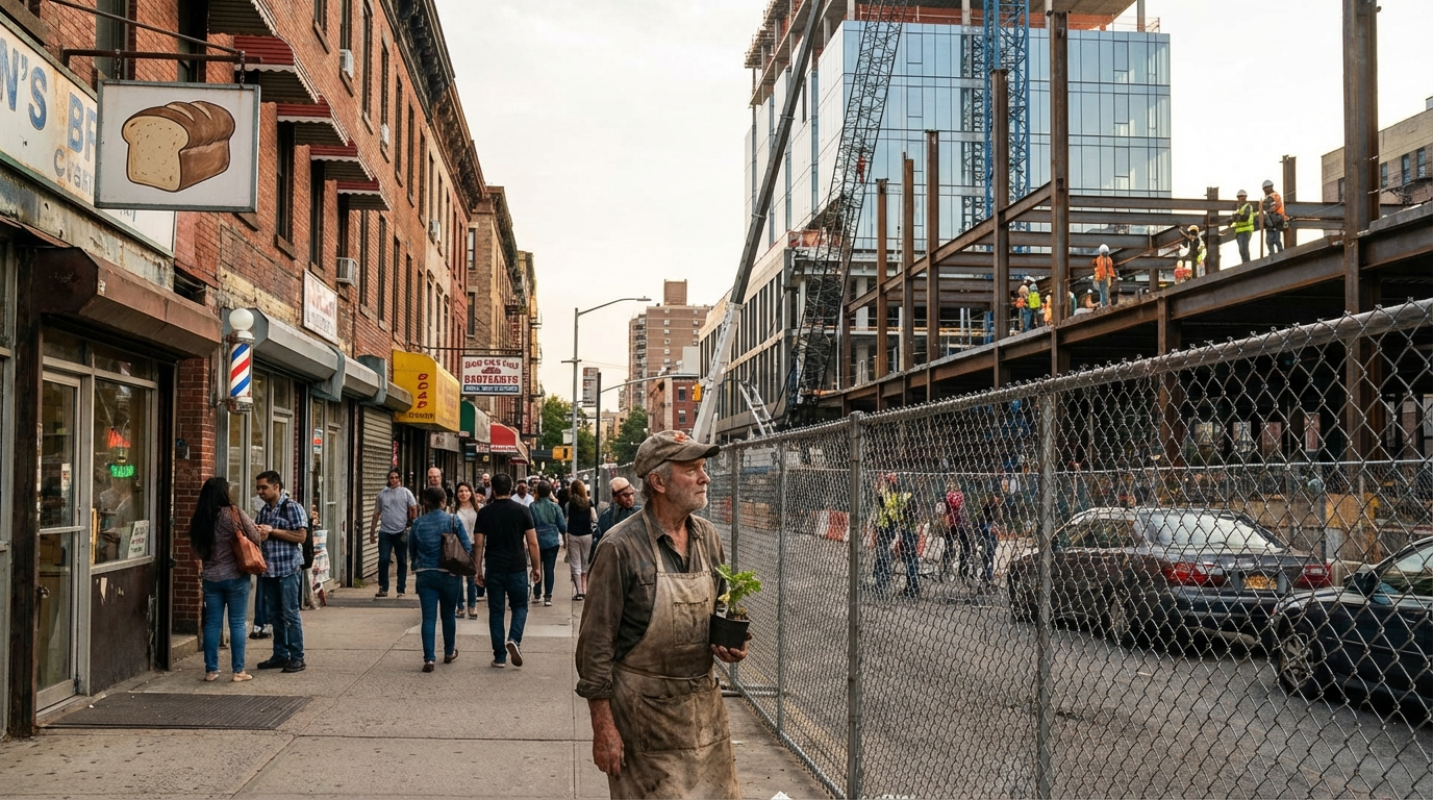
If you live in a desirable small town or an outer-ring suburb, you don't need a study to tell you that housing costs have gone bananas. You see it every time a house sells for $100,000 over asking, cash offer, sight unseen. That's the "Zoom Town" phenomenon in action.
When high-earners, who retain their big-city salaries but move to areas with lower costs of living, enter a market, they aren't just buying houses; they're warping the local economy of scale. They have far greater purchasing power than the established local workforce.
The numbers are staggering. Remote work is often cited as the key driver of the national housing boom, responsible for over 60% of the 24% housing price surge that hit the market between late 2019 and 2021.² That momentum hasn't stopped; it simply changed targets. Buyers today are prioritizing things like large living spaces, dedicated home offices, and excellent fiber optic internet access, driving demand specifically into suburban and smaller city properties.³
The Affordability Crisis for Locals
So, what happens to the long-time residents, the teachers, the nurses, and the local service workers? They get squeezed.
This influx creates a displacement effect. When the median home price jumps 30% in three years, the existing low-to-middle-income residents are priced out of buying or even renting. It’s gentrification sped up and driven by bandwidth, not industry.
The rental market suffers too. Investors, seeing the demand spike, convert long-term housing stock into short-term rentals (Airbnbs), further tightening supply and pushing up monthly costs for everyone else. If your local service workers can’t afford to live near where they work, your local economy stalls. You can’t get a decent cup of coffee if the barista lives an hour away.
The New Consumer in the Suburbs
For decades, the suburbs were needlessly dormant during the workday. Everyone was commuting into the central business district, spending their lunch money and dry-cleaning dollars there. Now, the money stays local. This is where small cities and suburbs win big.
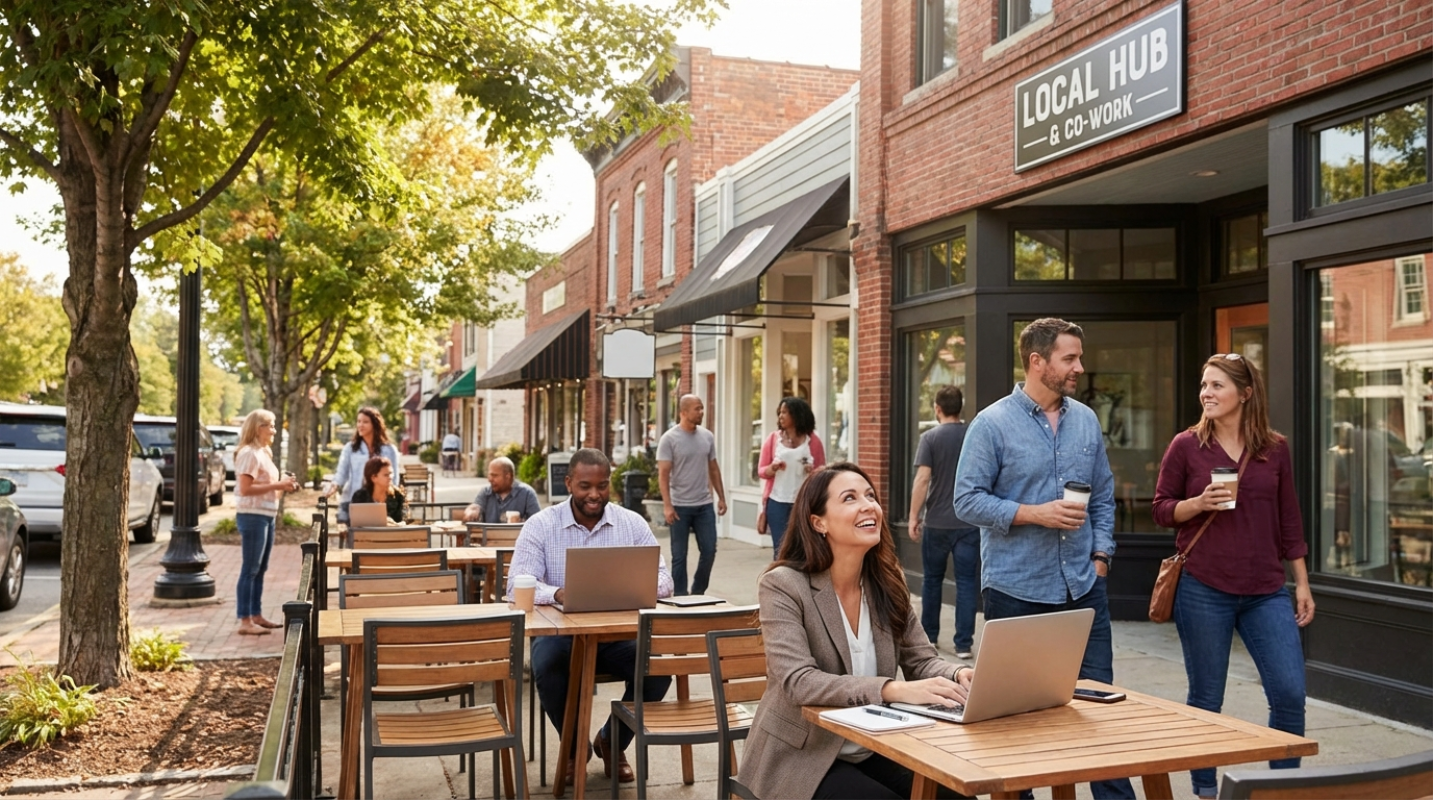
Think about your Main Street now compared to five years ago. There’s increased daytime local spending: the coffee shops are packed at 10 AM, the lunch spots are busy on Tuesdays, and local gyms and personal services have seen a massive boost. This shift creates a powerful local economic multiplier. When high-skill, high-earning workers move in, their spending builds job diversity and infrastructure development in their new community.⁵
The Service Sector Strain
But here’s the paradox: Although the demand for local services skyrockets, the businesses providing those services struggle to staff up.
The same high housing costs driven by the remote workers make it impossible for the local plumber, the restaurant server, or the daycare provider to afford housing near the demand. Businesses are forced to raise wages, which raises prices, creating a feedback loop that eats into the affordability advantage that attracted the remote workers in the first place.
The new third place economy is also changing the physical structure of local economies. We’re seeing a rise in local co-working spaces and neighborhood hubs, replacing the centralized corporate campuses of the past. These aren't just places to work; they are community anchors that help networking and local innovation, strengthening the non-commuter identity of the town.
Tax Base and Infrastructure Demands
The financial story of remote work is one of redistribution, not just growth. Major metropolitan centers are losing commercial property tax revenue as downtown offices sit partially vacant. Meanwhile, small cities and suburbs are seeing their coffers swell, though not without massive new demands.
The main benefit for receiving communities is property tax revenue. As residential values soar, so does the tax base. State and local property tax revenue hit a new high of $797.0 billion in 2024, an 8.2% increase from the prior year.⁸ This massive property tax boost is largely attributed to the soaring residential values in suburban jurisdictions that rely heavily on these taxes.
But this boon creates two major headaches.
First, there’s the Income Tax Dilemma. State and municipal income tax systems were built on the assumption that you work where your employer is headquartered. When a worker lives in Suburban Town A but works for a company based in Downtown City B, who gets the income tax revenue? These complex revenue-sharing agreements are now under immense strain, forcing states to rethink decades-old tax codes.
Second, there is the Infrastructure Strain. Your town’s roads, schools, and utilities weren't designed for a rapid population influx. More people means more traffic, more waste, and more kids in the classroom. The redistribution of population is stressing local infrastructure, necessitating massive new investments in public amenities and services outside traditional urban centers.
This is why, even if your local government is flush with property tax cash, they suddenly need to spend it all on widening roads, upgrading water treatment plants, and, importantly, expanding high-speed broadband. Communities without reliable, high-speed internet risk being completely left behind in this new economy.
Approaches for Sustainable Remote Growth
The remote work revolution is here to stay, and local governments are starting to realize they can’t just let it happen to them; they need to manage it.
The key is finding the balance: how do you attract the high-earning remote workers and the economic multiplier they bring without pricing out the long-time residents who keep the town running?
Some communities are getting creative. Take Tulsa, Oklahoma, which launched the "Tulsa Remote" program offering $10,000 relocation packages to remote workers. Studies show the program helped Tulsa earn an extra $62 million in its first year alone. That demonstrates the economic power of intentionally attracting high-skill talent, rather than passively waiting for the spillover.
Policy Solutions for the New Era
To sustain this growth, municipalities must act decisively on policy
- Zoning Flexibility, Cities and suburbs need to modify zoning to allow for more density and diversity in housing options, transforming vacant commercial spaces into mixed-use residential areas. This helps mitigate the housing crunch and the decline of commercial property values in major areas, which are expected to cumulatively lose up to 45% in value.⁹
- Affordable Housing Mandates, Requiring developers to include affordable units in new construction, or establishing local housing trust funds, is needed to protect service workers from displacement.
- Broadband Expansion, Access to fiber and 5G isn't a luxury anymore; it’s the new rail line. Local investment in digital infrastructure is the single most important action a small town can take to future-proof its economy.
The remote work trend isn't a challenge to be endured; it’s a permanent economic lever waiting to be pulled. The communities that adapt thoughtfully - that prioritize infrastructure, protect their existing residents, and actively recruit new talent - won’t just survive; they’ll redefine what local economic success looks like in the 21st century.
Sources:
1. PNAS - The Geography of Remote Work
https://www.pnas.org/doi/10.1073/pnas.2408930121
2. Real Estate U - Remote Work Impact on Real Estate Suburban Markets
https://realestateu.com/remote-work-impact-real-estate-suburban-markets/
3. CMS Mortgage - The Impact of Remote Work on Urban vs. Suburban Housing Markets
https://cmsmortgage.com/the-impact-of-remote-work-on-urban-vs-suburban-housing-markets/
4. ResearchGate - The Economic Impact of Remote Work
https://www.researchgate.net/publication/374747896_The_Economic_Impact_of_Remote_Work_Unpacking_Regional_Transformations_and_Economic_Multipliers
5. Eye on Housing - Property Tax Revenue Outpaces Other Sources in 2024
https://eyeonhousing.org/2025/03/property-tax-revenue-outpaces-other-sources-in-2024/
6. Tax Policy Center - Understanding the Looming Commercial Property Tax Shortfall
https://taxpolicycenter.org/taxvox/navigating-looming-commercial-property-tax-shortfall
This article is for informational and educational purposes only. Readers are encouraged to consult qualified professionals and verify details with official sources before making decisions. This content does not constitute professional advice.