 (Image source: Gemini)
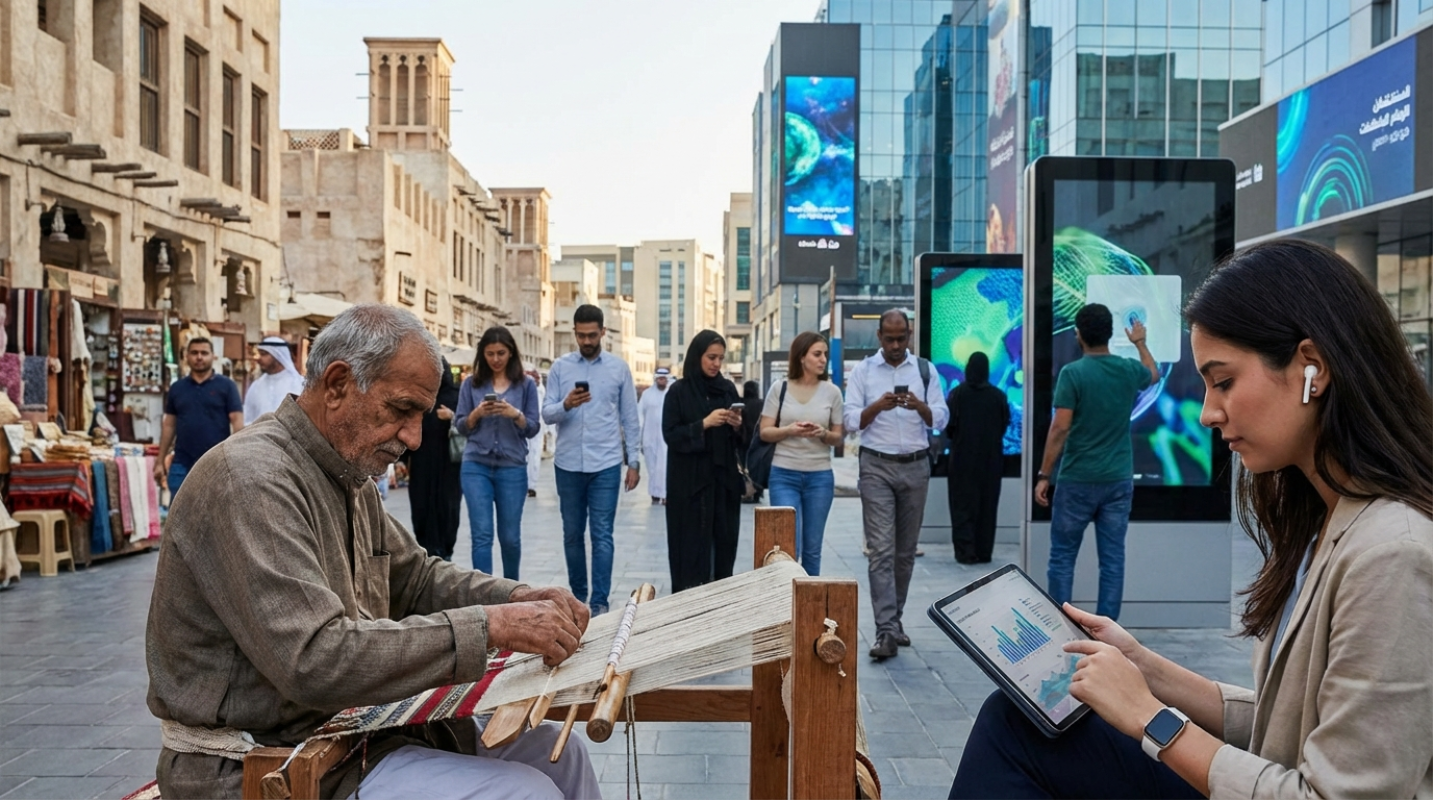
 When city planners talk about urban renewal, most people immediately picture sleek glass towers, new transit lines, and maybe a trendy coffee shop replacing an old warehouse. In 2026, modern urban renewal isn't just about demolition; it’s about targeted, capital-intensive investment designed to boost a city’s tax base and competitiveness.
But what happens when that competitive push collides head-on with the people who actually built the neighborhood's character in the first place?
This is the core tension we face today. Urban realization promises economic realization, reducing blight, and improving services. Yet, too often, the cost is the eradication of community fabric—the very identity and collective memory that made the neighborhood unique. We have to examine how economic development can be achieved without performing a social extraction, forcing out the long-term residents and small businesses that define a place.
Displacement and Cultural Loss
The moment a neighborhood becomes "discovered" by developers, a clock starts ticking for its long-term residents. The mechanism of displacement is usually predictable: rising property values driven by new, high-end construction inevitably lead to higher rents and property taxes.
This process is what we call gentrification, and it doesn't just empty apartments; it empties the neighborhood of its soul.
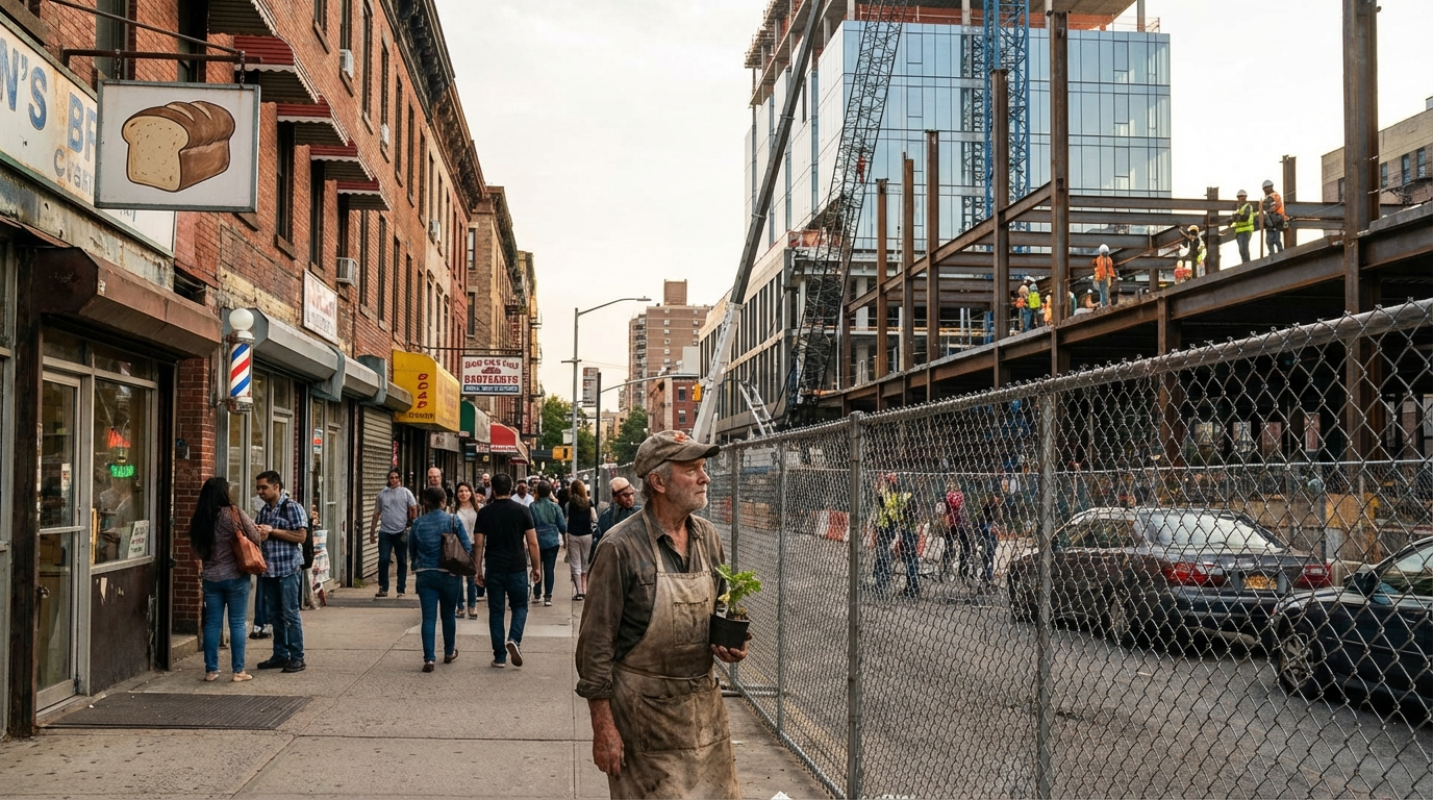
The real loss isn't just physical eviction. It’s the symbolic displacement that hits first. You might still live in your house, but the corner store that knew your name is gone, replaced by a boutique selling $40 candles. The local ethnic grocery store where your family has shopped for decades vanishes because its landlord sold the building.
This isn't just commercial turnover; it’s cultural erasure. When you lose those legacy shops, you lose the visible markers of history and community cohesion. Experts are increasingly recommending tools like a "conservation overlay" in development plans—policies designed explicitly to protect the cultural character and historical integrity of a place, not just the physical brick and mortar.¹ Without those policies, the unique sense of place that attracted the investment in the first place is destroyed in the process.
Job Shifts and Affordability Crises
The impact of renewal projects on livelihoods is immediate and often devastating for the working class. When a neighborhood is successfully renewed, it usually means commercial rents skyrocket.
Think about your local small business owners—the mechanic, the tailor, the family-run restaurant. They operate on tight margins. When their rent doubles, they have two options: close down or move to the city's periphery, often losing their established customer base in the process. This phenomenon is known as commercial displacement.
Renewal projects frequently replace low-cost commercial spaces with high-end retail or corporate offices. This fundamentally alters the local job market. We see a shift away from neighborhood-serving employment (like affordable childcare or repair services) toward high-end service jobs that often pay too little to afford the new, reorganized housing nearby.
The scale of this restructuring is enormous. Consider the massive public housing renewal efforts underway in major cities. In New York, the Permanent Affordability Commitment Together (PACT) program, a massive urban renewal undertaking, involves the restructuring or renovation of over 38,000 apartments across more than 140 developments.⁵ Although these projects aim to preserve affordability, they still represent a fundamental upheaval for tens of thousands of residents whose daily lives and economic supports are being completely reshaped.
This upheaval creates a deep paradox: the city may look wealthier, but the people who live there are often poorer, or simply gone.
Case Studies in Conflict: Successful Mitigation vs. Failed Integration
It’s easy to focus on the failures, but some projects demonstrate that equitable renewal is possible, though difficult. The difference often lies in whether the community is treated as a beneficiary or an obstacle.
A project that fails integration typically prioritizes speed and luxury. The historical precedent is grim: earlier renewal efforts were highly racialized, displacing hundreds of families and businesses, with nearly all displaced persons being Black. We’ve learned that simply building new things without mandated safeguards results in the same outcome.
But when cities prioritize Community Land Trusts (CLTs) and mandated mixed-income housing, the results are different. CLTs acquire land and remove it from the speculative market, making sure that housing remains permanently affordable for residents, regardless of the surrounding market boom.
The Income Satisfaction Gap
Even when small businesses survive the initial rent shock, the economic picture can be misleading. A recent analysis in Houston’s Third Ward showed that after realization efforts, a large majority of small business owners (around 75%) perceived their business as growing or successful. That sounds great, right?
But here’s the important detail: only about 40% of those same owners were satisfied with their net income growth.²
So what does this actually mean? It means they’re working harder, revenue might be up due to increased foot traffic, but rising operating costs—higher rent, higher taxes, increased security needs—are offsetting the revenue gains. They perceive success, but they aren't actually building wealth. This gap reveals the core flaw in market-driven renewal: it prioritizes the appearance of prosperity over the actual financial stability of existing residents.
Policy Recommendations for Equitable Renewal
If we accept that urban renewal is necessary for infrastructure and climate resilience, then we must mandate that it be just. We can’t rely on developers’ good intentions; we need binding policy.
Participatory Planning is the key to equitable development. This means involving existing residents and business owners early, authentically, and giving their input real teeth. It’s not just holding a single town hall meeting; it’s co-designing the future.
Top Recommendations for Equitable Policy
- Mandatory Equity Assessments: Cities must require a rigorous Racial Equity Report (RER) or similar assessment for all major land use decisions. The primary goal of this analysis must be to calculate the displacement risk posed to low-income residents and minority-owned businesses before the project is approved.
- Equitable Transit-Oriented Development (ETOD): Standard Transit-Oriented Development (TOD) just builds housing near transit, which quickly becomes unaffordable. ETOD explicitly integrates policies—like deep affordability mandates and anti-displacement funds—to make sure that all residents, regardless of income, benefit from improved transit access.
- Targeted Financial Support: We need policies that support vulnerable homeowners and renters directly. This includes creating resources like a Homeowner Help Desk to provide legal and financial counseling to those facing predatory speculation or rising tax burdens.
- Commercial Space Preservation: Use policy tools like rent stabilization for commercial spaces or mandated affordable commercial set-asides in new developments. If you want the local dry cleaner to stay, you have to guarantee they can afford the square footage.
The fight for equitable urban renewal isn't just about saving old buildings; it's about recognizing that community identity and economic livelihoods are inextricably linked. When we plan our cities, we are planning people’s lives. The development must serve the community, not displace it.
Sources:
1. Erosion of Community and Culture: The Role of Symbolic Displacement in Urban Renewal
https://rsfjournal.org/content/10/2/113
2. A 2024 State of Business Report on Small Business Livelihoods in Rekeyized Areas
https://spur.org/sites/default/files/2024-05/SPUR_Small_and_Mighty_0.pdf
3. Promoting Equitable Development in Communities
https://urban.org/sites/default/files/2024-06/Promoting_Equitable_Development_in_Communities.pdf
4. Getting to Equitable Development
https://brookings.edu/articles/getting-to-equitable-development/
5. New York City Housing Authority PACT Program Progress Report (2025)
https://wherewelive.cityofnewyork.us/wp-content/uploads/2025/01/WWL-24-Progress-Report.pdf