 (Image source: Gemini)
 The modern city is defined by constant change. We see rapid towers rising, new transit lines expanding, and neighborhoods transforming seemingly overnight. This relentless pace of urban development brings undeniable progress—new jobs, increased density, and modern infrastructure. But what is the hidden cost of this growth?
For many long-term residents, the speed of change feels less like progress and more like erosion. It chips away at two fundamental pillars of human life: Community Well-Being (the shared health, social cohesion, and stability of a neighborhood) and Identity (the deep, often unspoken connection between a place, its history, and the people who live there).
When development prioritizes profit over people, these key community aspects are immediately threatened. We’re talking about major pressures like aggressive gentrification, infrastructure strain, and the quiet disappearance of shared public spaces. The question isn't if cities should grow, but how. And importantly, who gets to stay when they do?
Gentrification and Displacement
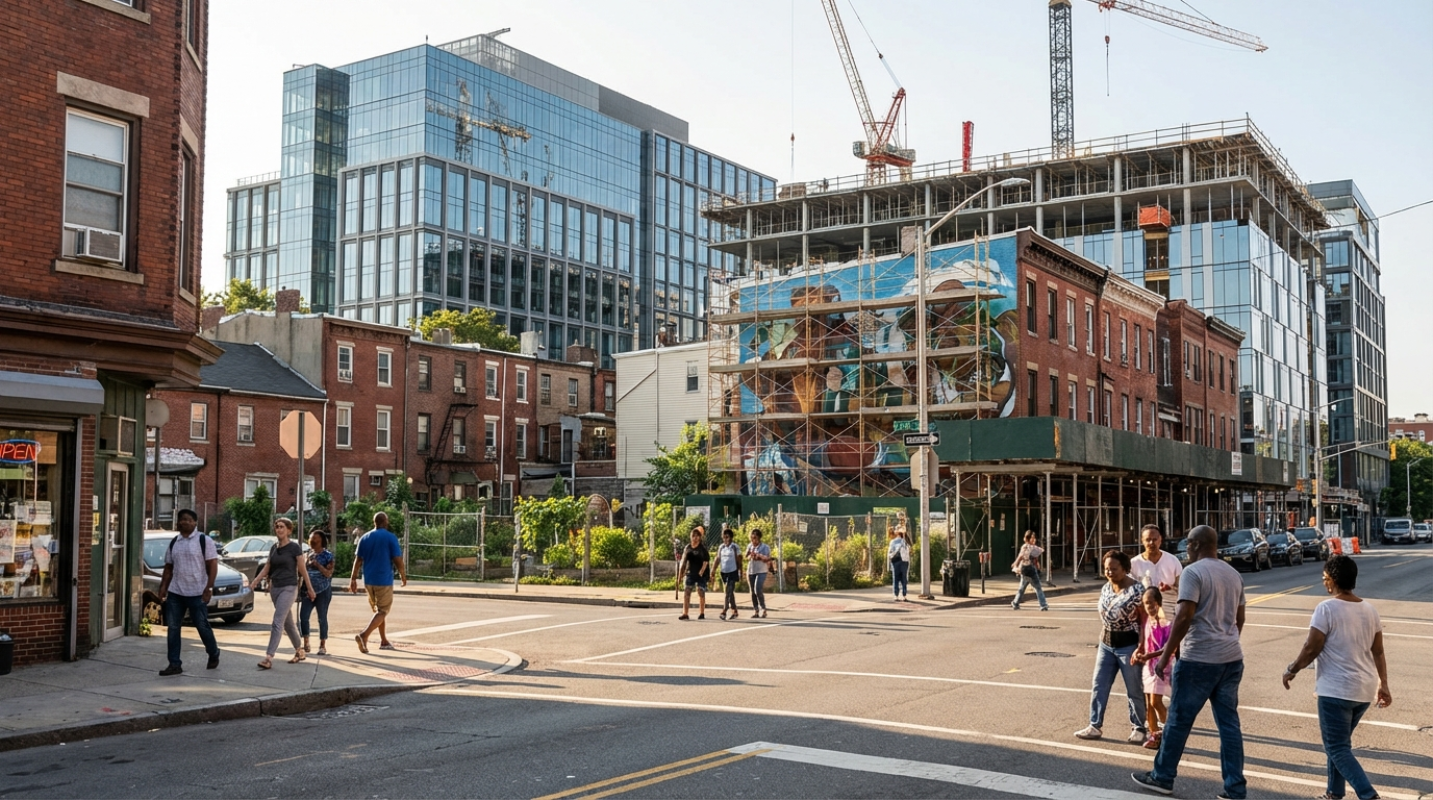
Gentrification is perhaps the most immediate and painful development issue facing communities today. It’s a process where rising property values, driven by an influx of wealthier residents and commercial investment, squeeze out the original inhabitants.
This isn't just about moving houses; it’s about the brutal severing of social networks. When neighbors who have supported each other for decades are forced to relocate, the established social fabric dissolves. The loss of community and culture creates what researchers classify as "community and individual traumas."¹ This trauma manifests as persistent stress, anxiety, trouble sleeping, and even the risk of depression or Post-Traumatic Stress Disorder (PTSD) stemming from the loss of home, culture, and social support.
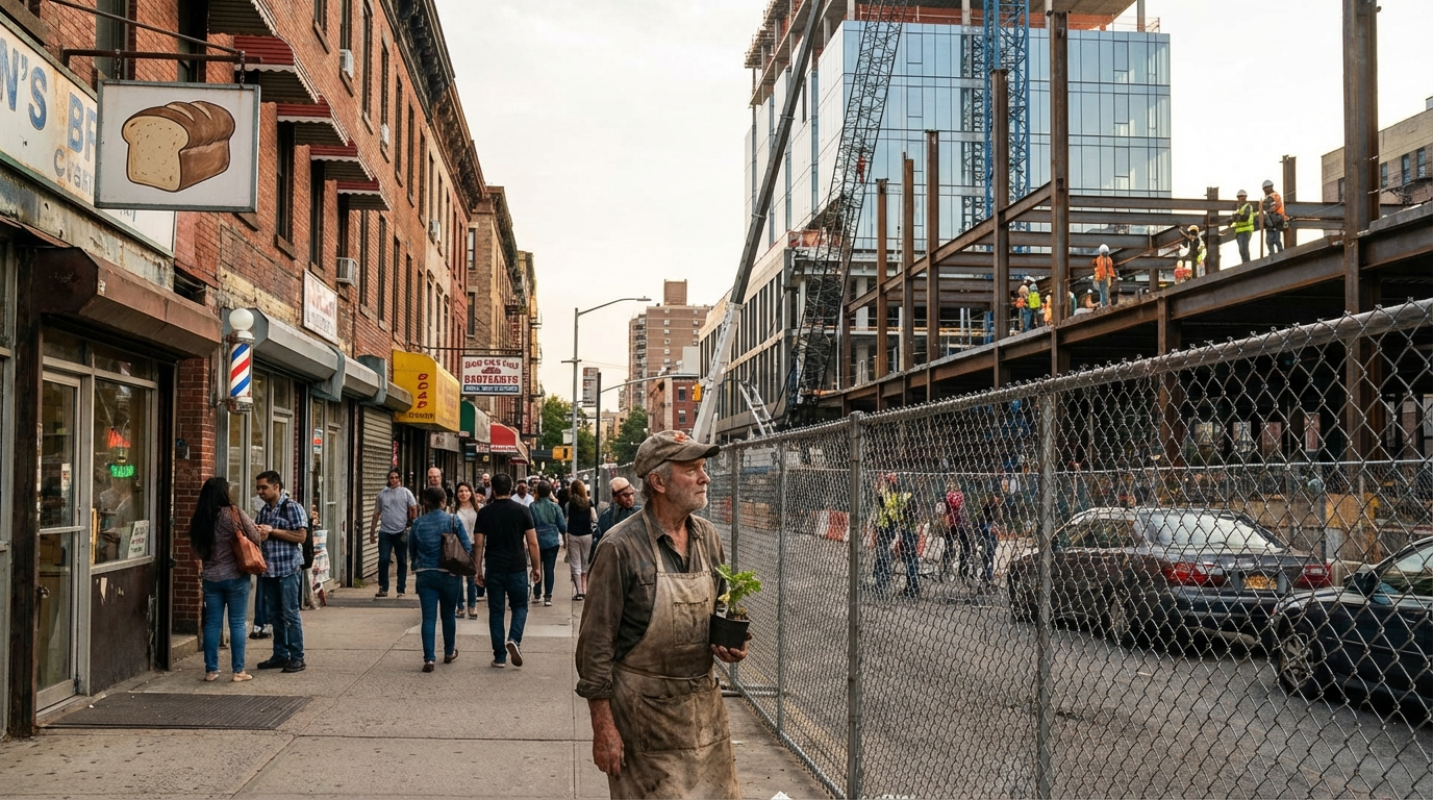
The economic reality of displacement is stark. Consider the case of Brooklyn, New York. Between 2010 and 2020, the Black population decreased by approximately 22,000 people due to unaffordable housing costs. During that same decade, home costs in Brooklyn skyrocketed by over 117%, effectively shutting out most original residents.² This isn't just a housing crisis; it's a deep attack on cultural identity.
When the local corner store, the family-run restaurant, and homogenized, high-end retail replaces the historic cultural anchors that caters to newcomers, the neighborhood’s unique story is erased. The sense of place—the collective memory held in the architecture and the local businesses—vanishes.
Infrastructure Strain and Accessibility Gaps
Even in neighborhoods that manage to resist outright displacement, rapid density often means straining the public services designed for a smaller population.
Think about your daily commute. When developers build thousands of new units without expanding transit capacity or upgrading outdated water systems, everyone suffers. Public services become overburdened. Transit is packed, local schools are overcrowded, and needed green space per capita shrinks dramatically.
This infrastructure strain creates a massive equity divide. Poor infrastructure planning disproportionately affects low-income and marginalized communities. If you live in a newly developed area where the nearest grocery store is three miles away, but the public transit line is unreliable or non-existent, your access to basic needs—and therefore your well-being—is immediately compromised.
When poorly executed transit-oriented development (TOD) focuses only on building around a station without making sure that the surrounding housing remains affordable, the new infrastructure isolates rather than connects. It becomes a resource for commuters passing through, not for the community living there.
Loss of Public Space and Green Infrastructure
Public spaces are the lungs and the living room of any community. They are the needed grounds for shared events, spontaneous interactions, and collective memory. Yet, in the rush to develop every available square foot, we often see the privatization of public life.
Shared parks, plazas, and community centers are often converted into commercial zones, exclusive developments, or simply paved over for parking. This trend has serious health implications. When opportunities for recreation, social interaction, and exposure to nature are reduced, the community’s mental and physical health suffers. It’s hard to build social cohesion when there’s nowhere free and open for people to meet.
Plus, public spaces are central to identity. They are where festivals are held, where political movements are born, and where generations of children have played. When a beloved local park is fenced off or replaced by luxury condos, an entire chapter of the neighborhood’s history is effectively closed.
Approaches for People-Centered Urban Planning
The good news is that these issues aren't inevitable. Urban planning can and must shift from a purely economic model to one that is people-centered. This requires implementing specific, protective approaches designed to balance growth with social equity.
One key approach is the implementation of Community Land Trusts (CLTs) and Inclusionary Zoning. CLTs allow the community to collectively own the land, thereby controlling the long-term affordability of housing built upon it, insulating residents from speculative market forces. Inclusionary zoning mandates that a portion of new units must be set aside for low- and moderate-income residents.
We also need to prioritize participatory planning models. This means genuinely helping residents in the decision-making process from the start. Fair planning requires using data to understand community trends and prioritizing all voices to share resources fairly.³
In 2026, cities are increasingly looking to targeted financial support to stabilize communities. Like, in Farmers Branch, Texas, city planners implemented initiatives to support local business retention and housing affordability, including a Minor Home Repair Program offering up to $5,000 in income-based help for needed repairs.³ These small, targeted interventions help maintain the residential stability that underpins community identity.
Here are some top recommendations for balancing growth with the preservation of heritage and equity
Top Recommendations for Equitable Urban Growth
- Implement Legacy Business Preservation Programs that offer tax breaks or grants to long-standing, culturally significant local businesses facing rent hikes.
- Use Digital Twins and other innovative technology to monitor and protect cultural heritage sites, especially those threatened by rapid re-development.
- Prioritize Green Infrastructure Mandates that require developers to replace or increase green space proportional to new density.
- Establish dedicated Affordable Housing Trust Funds funded by development fees to make sure a consistent stream of capital for protective housing projects.
Reclaiming the Human Scale in Urban Growth
The challenges facing our cities—from gentrification trauma to the erosion of shared spaces—are fundamentally challenges to the human spirit. If we continue to view cities solely as engines of economic output, we will inevitably sacrifice the social cohesion and unique identities that make places worth living in.
The necessary shift is clear: we must move away from purely economic development metrics and embrace complete, sustainable community development. That means measuring success not just by the height of the new towers or the speed of growth, but by the health, stability, and happiness of the people who call those places home.
It demands a proactive stance from policymakers to adopt inclusive zoning, and a vigilant commitment from residents to engage in local planning. The future identity of your city isn't written in stone; it’s being debated and decided in every planning meeting, every zoning vote, and every community meeting right now. It’s time to make sure the human scale prevails.
Sources:
1. The Psychological Impact of Gentrification: Community Identity, Culture, and Change
https://pmc.ncbi.nlm.nih.gov/articles/PMC7240775/
2. Causes, consequences, and health impacts of gentrification in the Global North: a conceptual framework
https://www.researchgate.net/publication/378938670_Causes_consequences_and_health_impacts_of_gentrification_in_the_Global_North_a_conceptual_framework
3. Promoting Equitable Development in Communities
https://www.urban.org/sites/default/files/2024-06/Promoting_Equitable_Development_in_Communities.pdf