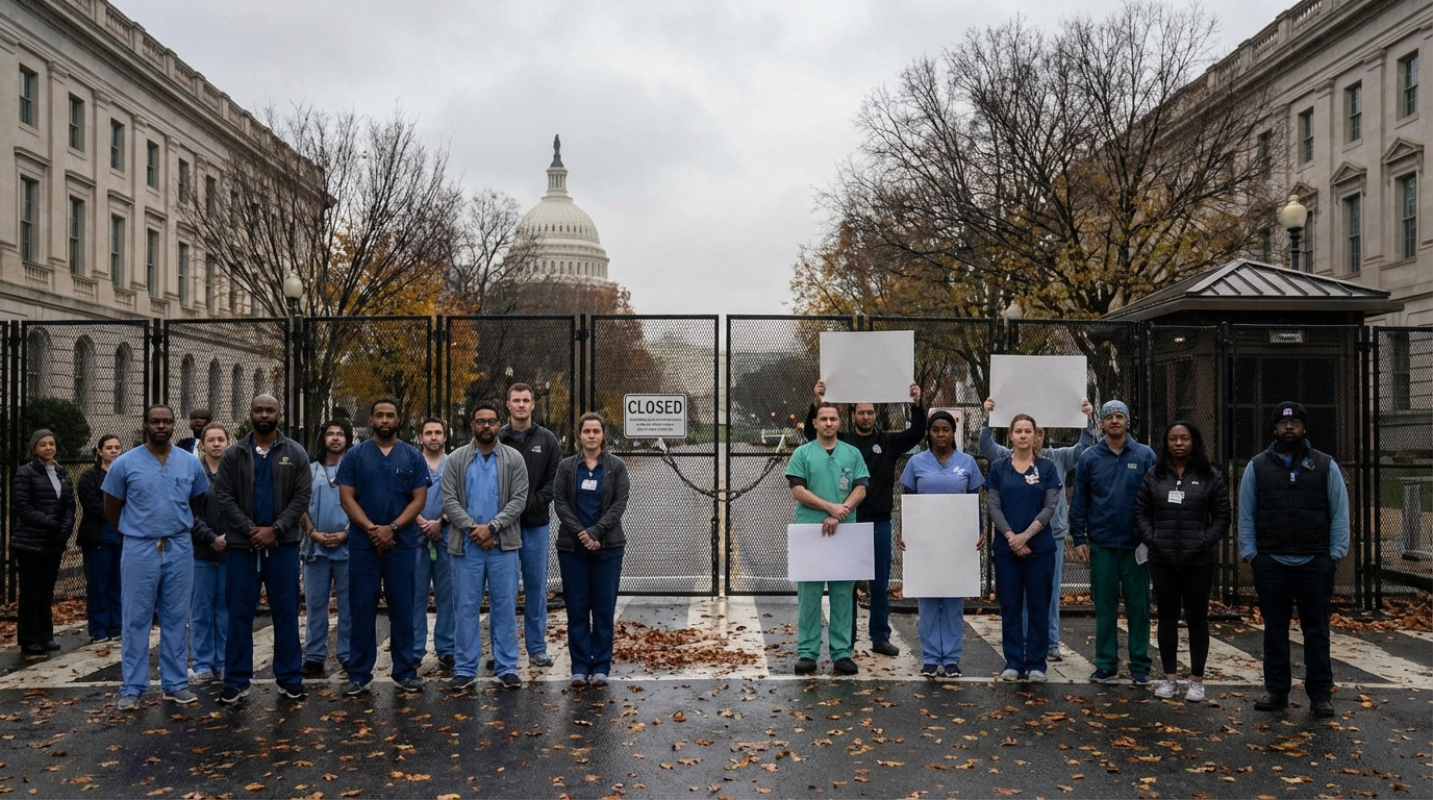
The federal government shutdown, which began on October 1st, has now officially ground into its second week. We passed the seven-day mark with no movement in negotiations, leaving hundreds of thousands of federal employees wondering when—or if—their next paycheck will arrive.
Non-needed federal services? They’re suspended. National parks? Closed. Regulatory enforcement is slowing to a crawl. The mood in Washington is less panicked than it is entrenched. Key leaders, including Senate Majority Leader John Thune, are holding firm, maintaining that the core issue driving the impasse—a massive healthcare spending dispute—is one that Congress can address later in the year, separate from the immediate funding needs.³
The Core Conflict: Disagreement Over Healthcare Subsidies
So, what is the fight actually about? It’s not about the typical appropriations bills. The central sticking point is the improved Affordable Care Act (ACA) Premium Tax Credits (PTCs).
These improved subsidies were temporary measures, set to expire at the end of 2025. Congressional Democrats have pledged not to vote for any budget extension unless it includes making these improved PTCs permanent. This move is projected to cost the government about $350 billion over the next decade.⁵ Republicans, who control the House, vehemently oppose the extension. They argue these are "COVID-era relics" that have unnecessarily inflated federal spending. They are pushing for reforms, including tighter income caps, aiming to reduce federal healthcare spending by over a trillion dollars in the long run.⁸
Impact on Federal Employees and the Public
If you know someone who works for the federal government, you know the pain is immediate. Approximately 900,000 federal employees are furloughed, barred from working. Meanwhile, another 2 million "excepted" needed workers—think TSA agents, border patrol, and some Veterans Affairs staff—are required to show up every day, but without guaranteed pay.²
This immediate halt in federal spending is already dragging down the economy. Analysts estimate that if the deadlock extends through the end of the month, annualized real Gross Domestic Product (GDP) growth in the fourth quarter of 2025 could drop by as much as two percentage points.⁴
On the public services front, the damage is mounting. The National Institutes of Health (NIH) has suspended new patient admissions and grant processing. Even important programs like SNAP (food stamp) benefits are facing interruption, creating tension points that amplify the political pressure.
Historical Context and Precedents
Sound familiar? We’ve seen this movie before, most recently during the 2018–2019 shutdown. But this current standoff feels uniquely high-stakes because the dispute centers on subsidies that directly impact the pocketbooks of millions of Americans.
If the improved ACA subsidies are allowed to expire, the financial cliff facing roughly 20 million people is steep. Experts predict the average out-of-pocket premium for subsidized households will more than double—a staggering 114% increase.⁶ Think about that: a family of four earning $75,000 could see their annual premium payment jump by over $3,300. That’s not a theoretical budget cut; that’s a household crisis.
This intense personal financial pressure is exactly why Democrats feel they have use, but it’s also starting to crack Republican solidarity.
Sources:
1. Government Shutdowns Q&A: Everything You Should Know
https://www.crfb.org/papers/government-shutdowns-qa-everything-you-should-know
2. 2025 United States federal government shutdown
https://en.wikipedia.org/wiki/2025_United_States_federal_government_shutdown
3. Federal Government Shutdown Grinds into a Second Week, But Quiet Talks Emerging
https://magnoliatribune.com/2025/10/08/federal-government-shutdown-grinds-into-a-second-week-but-quiet-talks-emerging/
4. Government Shutdown
https://www.jpmorgan.com/insights/global-research/current-events/government-shutdown
5. ACA Improved Premium Tax Credits Legislative Developments 2025-2026
https://www.astho.org/communications/blog/2026/aca-improved-premium-tax-credits-legislative-developments-2025-2026/
6. Health Insurance Subsidies Behind Government Shutdown
https://www.hks.harvard.edu/faculty-research/policy-topics/health/health-insurance-subsidies-behind-government-shutdown
7. Federal Government Shuts Down Over Health Care Subsidies
https://www.medicarerights.org/medicare-watch/2025/10/02/federal-government-shuts-down-over-health-care-subsidies
8. Unaffordable Healthcare Subsidies Government Shutdown
https://taxfoundation.org/blog/unaffordable-healthcare-subsidies-government-shutdown/