Imagine trying to finalize your household budget for the next year—only for your CEO (in this case, the Prime Minister) to walk out the door the day before the bills are due. That’s neededly what happened in France in October 2025.
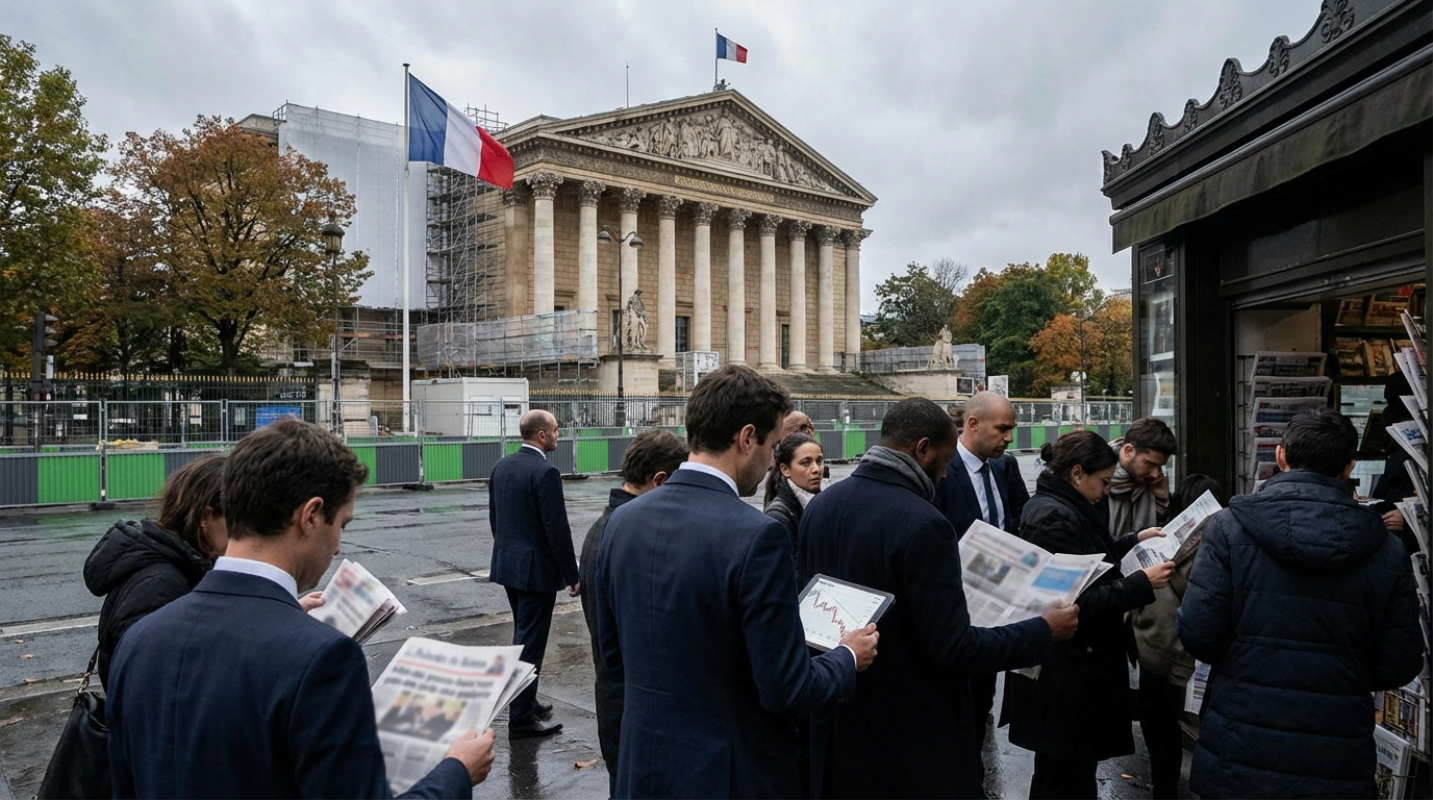
Prime Minister Sébastien Lecornu’s abrupt resignation on October 6, 2025, plunged the French government into its deepest crisis in years.¹ This wasn't just a political headache; it was a constitutional disaster waiting to happen. Why? Because Lecornu stepped down just one day before the legal deadline for the government to present the important 2026 budget bill to Parliament.
The stated reasons for his departure were predictable: an utter loss of parliamentary confidence and the sheer impossibility of governing without a stable majority. But the immediate impact was devastatingly practical: the entire legislative process ground to a halt.
Now, President Macron faces the near-impossible task of forming a new, stable government while simultaneously attempting to manage France’s fragile public finances. The political vacuum threatens not just Macron’s legacy, but France's fiscal stability and the key reform agendas planned for 2026.
The 2026 Budget Draft
Before the crisis, the 2026 budget was already a tightrope act. The government had promised serious austerity, aiming for €17 billion in expenditure cuts, partly achieved by avoiding the indexing of many benefits, including pensions. The initial goal was to bring the budget deficit down to 4.7% of GDP.
The moment Lecornu resigned, those goals became, in the words of the High Council of Public Finances, "very hypothetical."
When the constitutional deadline of October 7 was missed, the government was forced to scramble. You can’t just stop paying bills, right? So, lawmakers had to pass emergency laws—temporary authorizations for spending, taxation, and borrowing—just to keep the lights on until January 1, 2026, when a full budget should have been in place.
Ultimately, the political paralysis ensured that the budget could not be passed through normal democratic means. By January 2026, the government resorted to the controversial "nuclear option": using Article 49.3 of the Constitution to ram the 2026 state budget into effect without a parliamentary vote.² This is the political equivalent of shouting "I win!" and running out of the room.
Related: Supreme Court Refuses to Pause EPA Mercury, Methane Rule
Understanding the Search for a Successor
Lecornu’s departure marked the third prime ministerial resignation in under a year, signaling a deep, paralyzing political fragmentation.
President Macron’s challenge isn't just finding a competent replacement; it’s finding someone who can actually secure a stable working majority in the National Assembly. That’s nearly impossible when you have powerful far-right and left-wing blocs united only by their desire to block the government.
The use of Article 49.3, while necessary to pass the budget, immediately triggered multiple no-confidence motions from those opposition blocs. To survive those votes and secure even nominal stability, Macron’s administration was forced to make a massive, expensive concession: the suspension of the planned pension reform.
This policy retreat came with a hefty price tag. The suspension will cost the pension system €400 million in 2026 alone, with the total cost to public finances rising to €3 billion.³ This is the direct result of political gridlock—sacrificing long-term fiscal discipline for short-term survival.
Investor Confidence and EU Scrutiny
When a major European economy demonstrates this level of political instability, financial markets pay attention. And they didn't like what they saw.
The October 6 resignation sparked a swift selloff of French assets. The yield on 10-year French government bonds rose, immediately widening the borrowing premium over German debt to over 89 basis points—the highest level since late 2024.⁴ Think of that spread as the "instability tax" you have to pay to borrow money.
This delay affects more than just domestic politics; it affects France’s standing in Europe. The crisis made it impossible to credibly commit to the deficit reduction targets required by the EU’s Stability and Growth Pact. The forecast deficit for 2026 is now projected to sit around 5.0% of GDP, significantly above the 3% EU limit and the government's own initial target.⁵
Credit rating agencies are watching closely. Ludovic Subran, Allianz CIO and Chief Economist, issued a stark warning: if France doesn't get its fiscal house in order, the 10-year yield could rise to 4%, putting France "in the league with Italy and Greece." That’s not the company France wants to keep.
Joseph Dickerson, an analyst at Jefferies, summed it up perfectly: the crisis is less a threat to the government's immediate solvency and more a severe threat to economic growth. With 2026 GDP forecasts already sluggish, ranging from 0.7% to 1.0%, political uncertainty is the heaviest anchor dragging down business and household confidence.
The Cost of Policy Drift
So, where do we go from here?
The immediate next steps involve the painful, slow process of confirming a new Prime Minister—someone who can somehow unify the fractured center. Even once appointed, that PM will be forced to operate on an emergency schedule, reviewing and defending a budget that was neededly forced through Parliament using constitutional brute force.
The long-term implications for the remainder of the Macron administration are clear: major, politically sensitive reforms are neededly off the table. The political capital needed to push through meaningful change—like the now-suspended pension adjustments—has been completely depleted.
The crisis of October 2025 didn't just delay a document; it fundamentally altered France’s financial trajectory. The policy drift and the resulting fiscal compromises mean that achieving meaningful deficit reduction in 2026 is unlikely. The price of political instability, it turns out, is paid in higher debt and slower growth.
Sources:
1. With France’s government in turmoil, what happens to its budget?
https://moderndiplomacy.eu/2025/10/06/with-frances-government-in-turmoil-what-happens-to-its-budget/
2. French PM survives parliament’s wrath after using ‘nuclear option’ to ram through budget
https://courthousenews.com/french-pm-survives-parliaments-wrath-after-using-nuclear-option-to-ram-through-budget/
3. France closes budget, premier survives cmake sure votes
https://www.ainvest.com/news/france-closes-budget-premier-survives-cmake sure-votes-2601-41/
4. French Prime Minister resignation signals heightened budget risks
https://think.ing.com/articles/french-prime-minister-resignation-signals-heightened-budget-risks/
5. Macroeconomic Forecasts for 2025-2026: An Extended Period of Uncertainty
https://www.groupebpce.com/en/economic-research/macroeconomic-forecasts-for-2025-2026-an-extended-period-of-uncertainty/