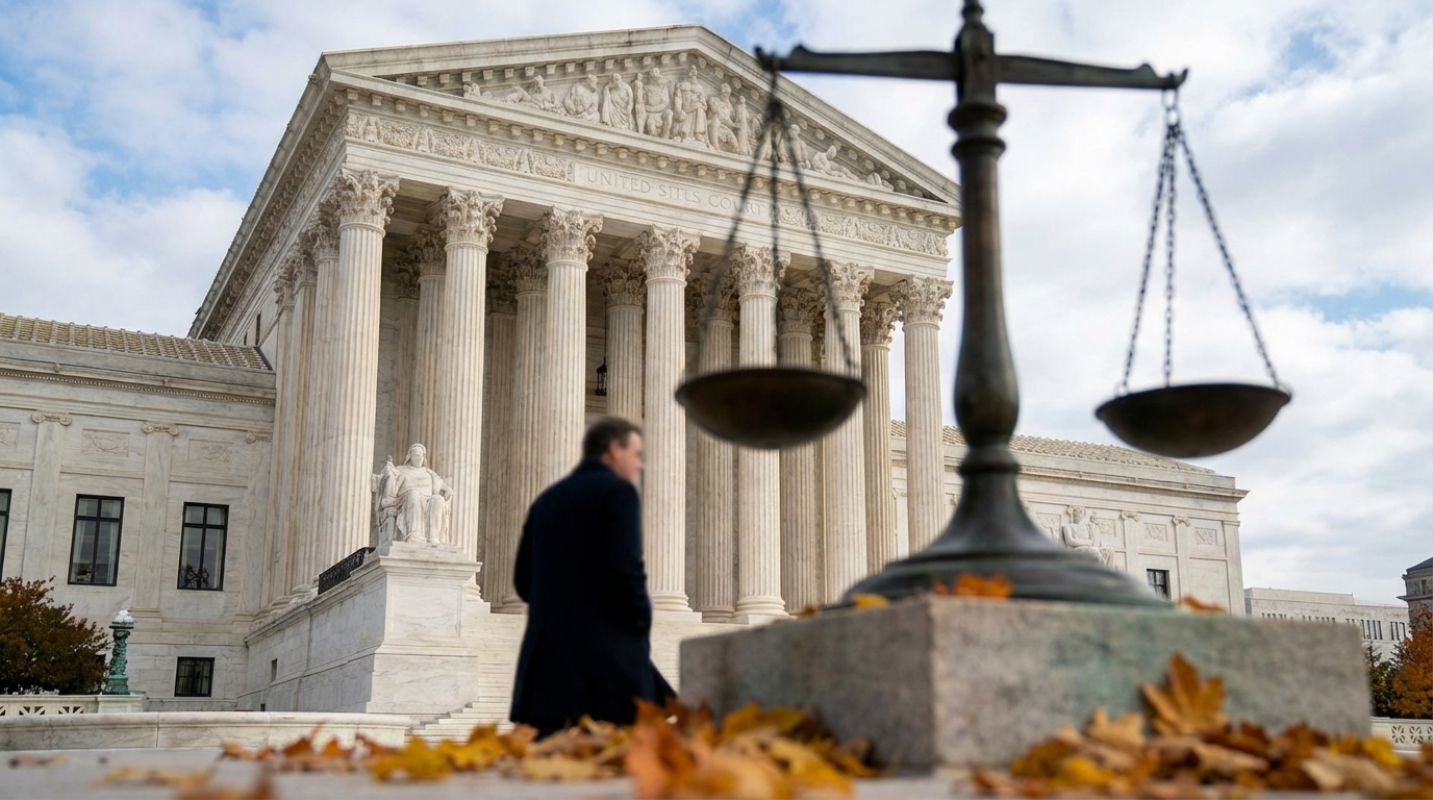
Imagine you’re running a massive power plant, and you’ve just spent years fighting costly environmental regulations in court. Suddenly, in October 2024, the Supreme Court issues a curt, one-line order that changes everything. They didn’t rule on whether the regulation was legal; they just said, "No, you can't stop it now."
That’s exactly what happened on October 4, 2024, when the U.S. Supreme Court denied emergency applications from a coalition of states and industry giants seeking to halt two major Environmental Protection Agency (EPA) rules.¹ This decision, quietly delivered from the Court's "shadow docket," was less a legal victory for the EPA and more a massive procedural defeat for the energy sector.
So what does this actually mean? It meant that the EPA's updated rules governing mercury and air toxics (MATS) for power plants, and a separate rule tackling methane emissions from the oil and gas sector, were immediately enforceable. For companies that had banked on the courts stepping in, the clock started ticking much faster. This refusal to grant a stay signaled a moment of regulatory stability, forcing immediate compliance planning and massive capital expenditures, even while the underlying legal battles continued in the D.C. Circuit Court of Appeals.
Mercury, Methane, and Public Health
To understand the stakes, you need to know what industry was trying to stop. These weren’t minor adjustments; they were cornerstone climate and public health protections.
The Methane Mandate
The Methane Rule targets the oil and gas sector, requiring stricter controls on leaks and venting from new and existing facilities. Methane is a potent greenhouse gas—far more effective at trapping heat than carbon dioxide in the short term. The EPA’s goal here is ambitious: cutting methane emissions from this sector by up to 80% over the next 14 years.³ The rule also limits smog-forming volatile organic compound (VOC) pollution, providing immediate local air quality benefits.
For the industry, this rule mandates extensive monitoring programs, technical upgrades, and the accelerated adoption of leak detection technology. They argued that the timeline was too aggressive, citing supply-chain constraints and technical staffing shortages.
The MATS Update
The second rule is an update to the Mercury and Air Toxics Standards (MATS), focused squarely on coal-fired power plants. When the EPA finalized this update on April 25, 2024, it was tightening standards that had already been in place for years.
This update requires coal plants to reduce emissions of hazardous air pollutants (HAPs) like arsenic, chromium, nickel, and, of course, mercury. The 2024 update significantly strengthens the standards, tightening the emissions standard for toxic metals by 67% and imposing a 70% reduction in the mercury standard for certain lignite-fired units.¹⁰
The EPA projected that the update would yield substantial benefits—about $300 million in health benefits and $130 million in climate benefits—while costing the industry roughly $860 million in compliance.¹⁰ Industry petitioners, but warned that the rule would force "irreversible decisions about plant closures" and threaten electric reliability.
Why the Stay Failed
When industry groups and states ask the Supreme Court to stop a regulation before the main case is decided, they are asking for an emergency stay. This is a tall order. You can’t just say, "We don't like it." You have to demonstrate two very specific things
1. A likelihood of success on the merits: You must convince the justices that when the full case is heard, you are likely to win.
2. Irreparable harm: You must prove that if the rule is allowed to continue, the harm caused to you (financial, operational, etc.) cannot be undone later, even if you eventually win the case.
The Court’s refusal to grant the stay on October 4, 2024, suggests the petitioners failed to clear one or both of these high bars.
What’s fascinating is the lack of fanfare. The order was brief, issued without opinion, and had no recorded dissents. This is significant because it contrasts sharply with the Court’s recent history of taking up and striking down major agency actions, most famously in the 2022 West Virginia v. EPA case. Legal analysts saw the denial as a rare check on the Court’s tendency to intervene quickly, signaling that not every EPA rule would be immediately blocked, regardless of the underlying challenge.¹
Environmental groups, like the Environmental Defense Fund (EDF), were quick to praise the decision, calling the industry applications "long-shot bids" against "key protections."²
Immediate Industry and Environmental Consequences
For the power and oil and gas industries, the Supreme Court’s decision was a starter pistol. They couldn't wait for a favorable ruling that might be years away. They had to start spending now.
Think about the sheer scale of investment required. For the MATS update, the initial compliance deadline loomed large: July 8, 2025.¹⁰ That meant power companies had to immediately begin planning for major upgrades—things like new control devices and advanced filter technology—or decide to retire older coal units altogether. The industry’s warning of "irreversible decisions" became a reality overnight.
On the environmental side, the decision was a massive relief. It make sured that the public health benefits—cleaner air, reduced asthma rates, and lower rates of neurological damage from mercury exposure—could begin accumulating without further delay.
The Shifting Sands of Compliance Deadlines
Although the Supreme Court forced immediate action, the regulatory path didn't stay perfectly straight. The oil and gas sector quickly lobbied the EPA regarding the feasibility of the Methane Rule deadlines.
In response, the EPA later issued an Interim Final Rule (IFR) in July 2025, extending several key deadlines for the Methane Rule. This was a pragmatic move, acknowledging the real-world difficulties of deploying specialized equipment across thousands of well sites simultaneously.
Like, the deadline for the first annual report required under the Methane Rule was significantly pushed out, with no report due before November 30, 2026 (extended from the original 2025 deadline).⁶ This provided an important 18-month cushion for operators to secure necessary hardware and implement monitoring programs.
But the MATS deadline for coal plants—July 8, 2025—remained the immediate focus until later political developments in 2025 introduced new uncertainty. But in October 2024, the instruction was clear: comply or face penalties.
The Regulatory Precedent for 2026 and Beyond
Looking ahead from our vantage point in 2026, the Supreme Court’s 2024 stay denial is an important benchmark. It clarifies that while the Court is willing to scrutinize the scope of EPA authority (as seen in West Virginia v. EPA), it isn't willing to grant emergency relief for every significant environmental rule.
This refusal sends a strong message to regulated industries: don't assume the high court will rescue you from compliance costs before the litigation is even complete. You must proceed with implementation plans, even if you are simultaneously fighting the rule in court.
The broader implications for climate policy are significant. The denial boosted the stability of other major environmental regulations that were (and still are) facing judicial review, reinforcing the idea that the EPA retains substantial power to regulate air quality and hazardous pollutants under the Clean Air Act.
For the energy sector, the focus now shifts from stopping the rules to managing the cost of compliance. Whether it's upgrading filtration systems in power plants or installing advanced leak detection across gas fields, the investment decisions forced by the October 2024 ruling are already shaping the infrastructure of energy production in the late 2020s. The stay denial didn't end the legal fight, but it certainly determined who held the momentum.
Sources:
1. Supreme Court Declines to Stay EPA Mercury and Methane Rules
https://www.adamsandreese.com/insights/supreme-court-declines-to-stay-epa-mercury-and-methane-rules
2. Supreme Court Will Not Block Two Key Climate and Clean Air Protections
https://www.edf.org/media/supreme-court-will-not-block-two-key-climate-and-clean-air-protections
3. Supreme Court Leaves in Place Two EPA Regulations Curbing Methane and Mercury Emissions
https://www.pbs.org/newshour/politics/supreme-court-leaves-in-place-two-epa-regulations-curbing-methane-and-mercury-emissions
6. U.S. EPA Finalizes Oil and Gas Compliance Deadline Extension
https://www.all4inc.com/4-the-record-articles/u-s-epa-finalizes-oil-and-gas-compliance-deadline-extension/
10. Presentation MATS Final 2024
https://www.epa.gov/system/files/documents/2024-04/presentation_mats_final-2024-4-24-2024.pdf