 (Image source: Gemini)
 Think about your worst commute last week. Were you stuck, gridlocked, surrounded by honking horns and exhaust fumes? Did your shoulders tense up? Did you feel a low, simmering resentment before you even started your workday? Now, compare that to the feeling of walking through a quiet, tree-lined park, or cycling safely along a dedicated path. You arrive feeling alert, not exhausted.
This isn't just about preference; it’s about biology. The surprising truth is that the physical structures of our cities, from the width of the sidewalks to the placement of the bus stop, are important determinants of public mental health and workforce productivity. We often treat urban design as an aesthetic concern, something relegated to architects and planners. But thoughtful urban planning, centered on infrastructure and public space, is actually a powerful form of preventative healthcare.
We must move past the idea of "pretty parks" being a nice-to-have amenity. We need to recognize systemic design choices as the hidden architecture of our minds.
The Stress Space
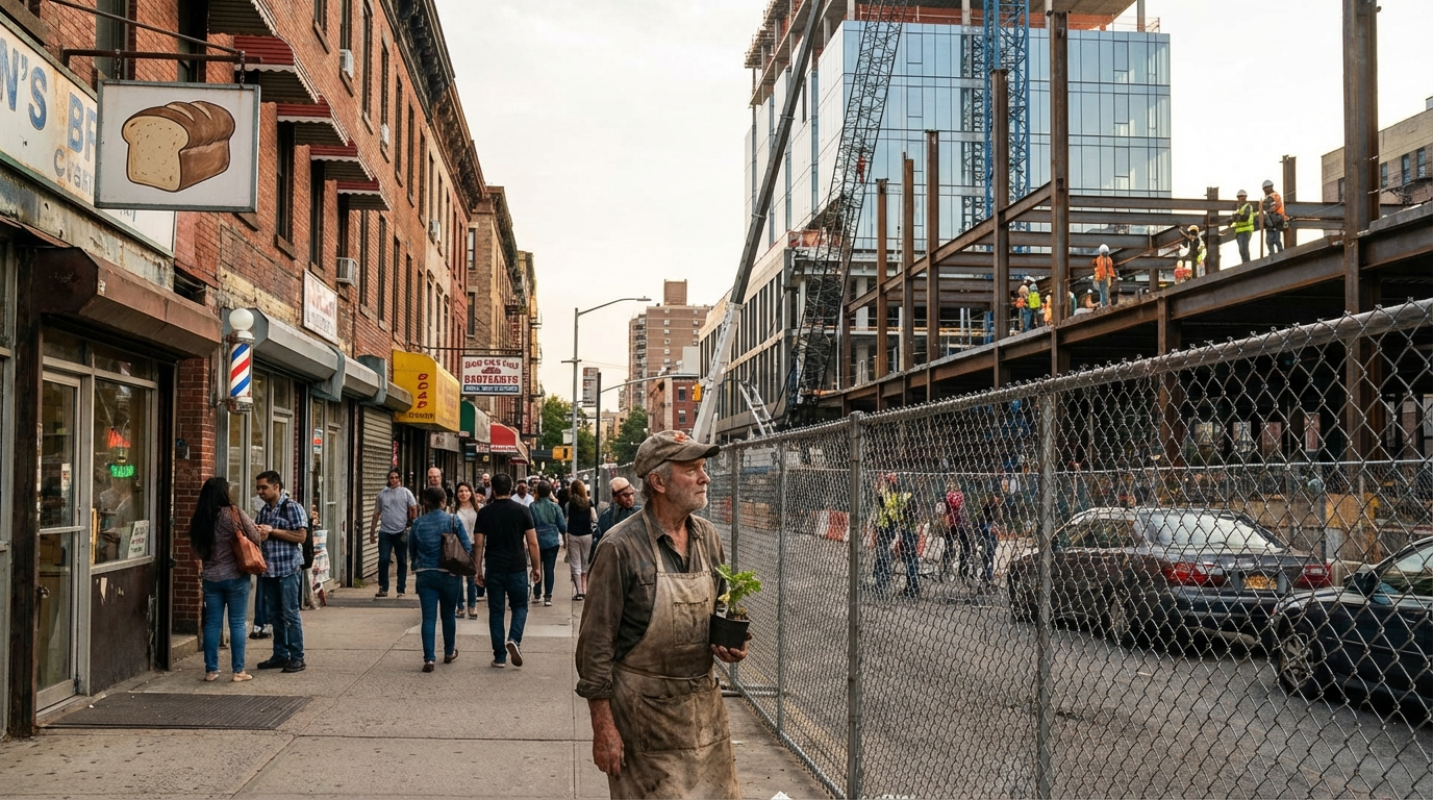
The modern city, despite its efficiency, has become a massive engine for anxiety. Experts now talk about the concept of the "anxious city," an environment where the cumulative effects of spatial design intensify psychological strain.
Noise Pollution and Sensory Overload
The constant, grating reality of traffic noise, poorly insulated buildings, and high-density living creates perpetual sensory overload. This isn't just annoying; it’s chemically detrimental. Constant noise pollution elevates cortisol, the stress hormone, leading to chronic anxiety and cognitive fatigue. If your infrastructure prioritizes the unimpeded flow of cars over the quiet enjoyment of residents, you are literally designing stress into your daily lives.
Studies show that people living in urban environments face up to a 39% higher risk of mood disorders and up to 21% more anxiety disorders compared to those in rural settings.¹ This isn’t a coincidence; it’s a consequence of the environment.
The Concrete Desert Effect
When you drive through miles of concrete and asphalt without seeing a single tree or green space, you are experiencing the "concrete desert" effect. Humans are hardwired for biophilia (a connection to nature). When that connection is severed, our stress levels spike.
Access to green and blue spaces (parks, rivers, lakes) is proven to reduce stress symptoms. When planning ignores the need for these natural buffers, it creates environments that actively degrade your mental resilience. We are neededly forcing people to live in a constant state of low-grade fight-or-flight.
Walkability vs. Car Dependency
Forced car dependency is perhaps the most insidious driver of urban stress and isolation. Long, stressful commutes are major sources of mental exhaustion and decreased life satisfaction. Plus, car-centric infrastructure forces sedentary behavior, which contributes to depression and isolation.
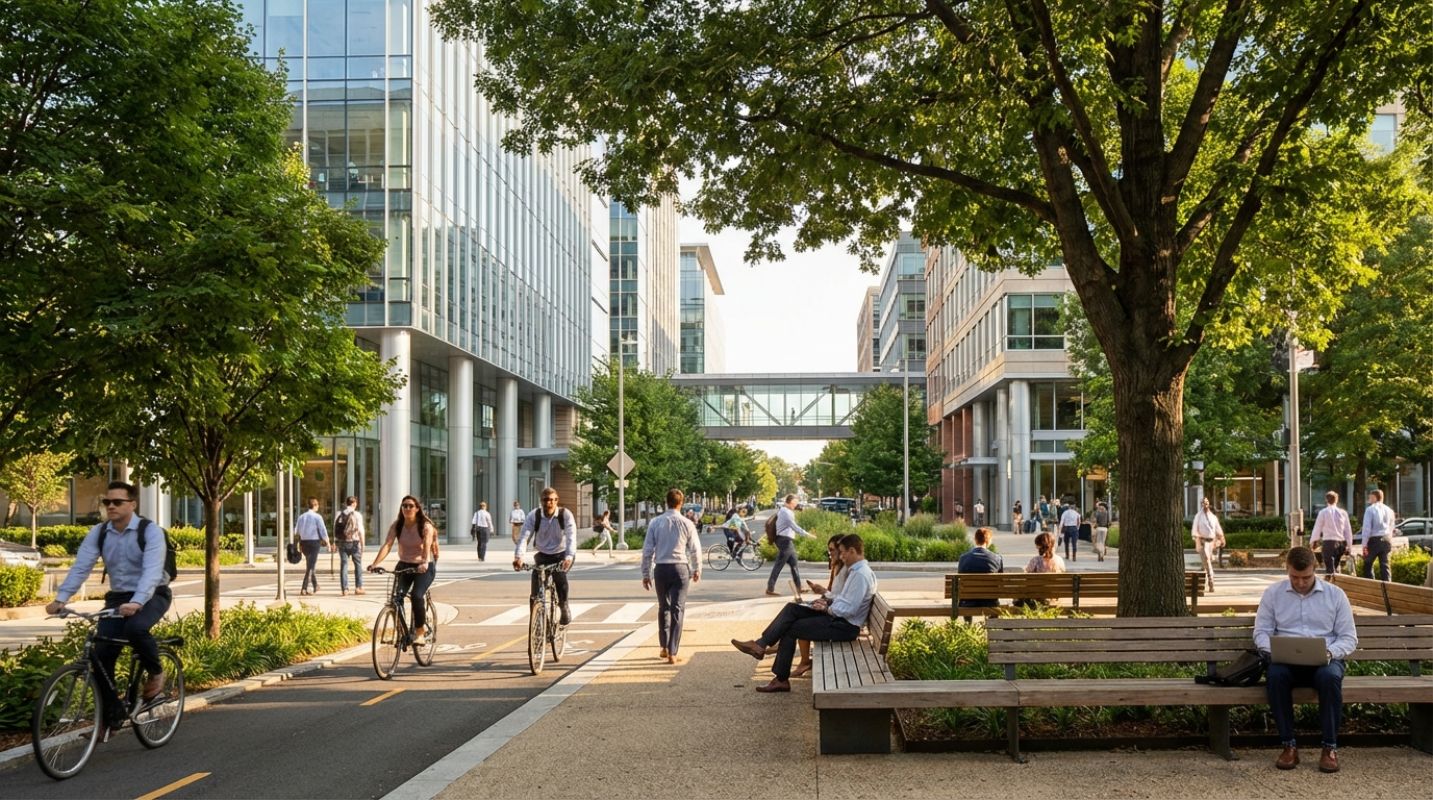
When infrastructure is designed primarily for rapid vehicular movement, walking and cycling become dangerous, unpleasant, or simply impossible. This lack of active transportation options removes the valuable mental health benefits of daily physical activity and social interaction. If you can’t safely walk to get a coffee or cycle to work, your city is failing your wellbeing.
Productivity Powered by Place
The relationship between urban design and the bottom line is direct. When people feel better, they work better. Designing for mental health is designing for economic output.
The Role of Natural Light and Air Quality
This principle starts at the building level but extends to the public area. Access to natural light and high-quality air in offices and public spaces is directly correlated with alertness and reduced error rates. Businesses near well-designed green spaces report improved employee productivity and higher customer satisfaction.
In fact, prioritizing good design could yield significant economic returns. One analysis projected that improving urban planning to prioritize wellbeing could result in a massive £15.3 billion boost to the economy by 2050, including a £5.4 billion productivity increase from reduced stress-related time off.² A well-designed workspace, whether indoors or out, can lead to a 12% spike in productivity.
Connectivity and ‘Third Places’
Loneliness is a significant drag on productivity and public health. We need spaces that encourage social bridging, not just social bonding. This is where "third places" come in: accessible public squares, safe pedestrian zones, community libraries, and mixed-use zoning that allows for spontaneous interaction.
Infrastructure that supports these places, like reliable public transit and safe sidewalks, encourages people to leave their homes and connect. When your city makes it easy to meet a neighbor or run into a colleague, you are building a sense of belonging that actively counteracts isolation.
Designing for Movement
Active transportation infrastructure is neededly preventative medicine built into the streetscape. The provision of dedicated, safe bike lanes and well-maintained, continuous sidewalks doesn’t just help you get around; it improves executive function and reduces cardiovascular risk. This is why cities like Lisbon are moving toward the "15-Minute City" model, where needed amenities are reachable on foot or by bike. This focus on human-scale mobility alleviates a major source of urban stress and anxiety.
Infrastructure Interventions That Work
We don’t have to guess what works; we have evidence from cities that have prioritized human-centric design. These examples frame wellbeing infrastructure as a necessary investment, not an optional expense.
The Financial Argument for Health-Centric Planning
In Bradford, UK, city planners used data showing that improving walkability, expanding green spaces, and improving public transport would lead to significant savings in healthcare costs.³ This provides a concrete economic rationale for prioritizing health in every planning decision. When you reduce stress and encourage movement through smart infrastructure, you reduce the strain on the public healthcare system.
Top Recommendations for Infrastructure Investment
- Green Corridors, Integrating native planting and green infrastructure along major travel routes to filter pollution and provide visual relief.
- Pedestrianization Zones, Converting high-traffic commercial areas into safe, car-free zones to build social interaction and reduce noise pollution.
- Micro-Mobility Hubs, Creating safe, integrated docking stations and storage for bikes and scooters near transit points, encouraging the final mile of active transport.
The Mumbai Coastal Road
Looking at large-scale interventions, the ongoing Mumbai Coastal Road project, while complex, aims to drastically cut chronic traffic congestion. Reducing the daily, stressful commute time for millions directly addresses a major source of mental exhaustion, preparing the workforce for higher engagement and productivity. When movement feels safe and humane, the city feels less like an obstacle course and more like a place built for you.
Re-Centering the Human in Urban Planning for 2026 and Beyond
The core argument is clear: infrastructure is preventative mental healthcare. The roads we build, the parks we preserve, and the transit systems we fund directly determine how stressed, isolated, or productive we are.
In 2026, we must demand a fundamental shift in how we approach development. We need to advocate for mandatory mental health impact assessments in all new urban developments and infrastructure projects. We can no longer afford to design cities merely for the efficient movement of goods and cars.
We are designing for human flourishing. The difference between a city that drains your energy and one that helps you often comes down to the quality of the planning and the infrastructure beneath your feet. It’s time we built environments that help us breathe, connect, and thrive.
Sources:
1. Neurospace: How Urban Design Can Impact Mental Health & Well-Being
https://neurospace.org/2024/09/09/how-urban-design-can-impact-mental-health-well-being/
2. Unlocking Prosperity: The Economic Benefits of Sustainable Urban Infrastructure
https://www.designdivision.org/unlocking-prosperity-the-economic-benefits-of-sustainable-urban-infrastructure/
3. How we can better design urban environments for mental wellbeing
https://www.weforum.org/stories/2025/05/how-we-can-better-design-urban-environments-for-mental-wellbeing/
This article is for informational and educational purposes only. Readers are encouraged to consult qualified professionals and verify details with official sources before making decisions. This content does not constitute professional advice.