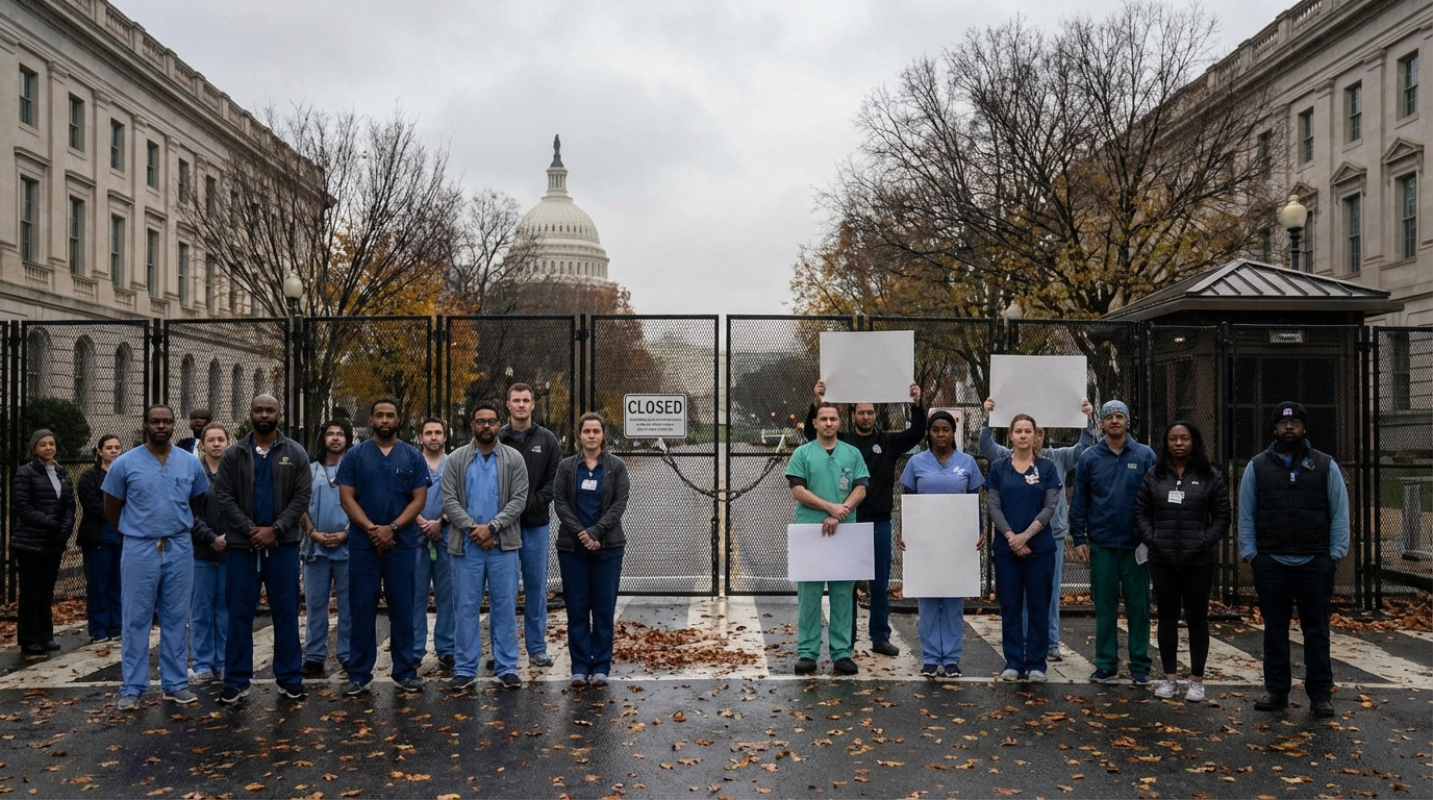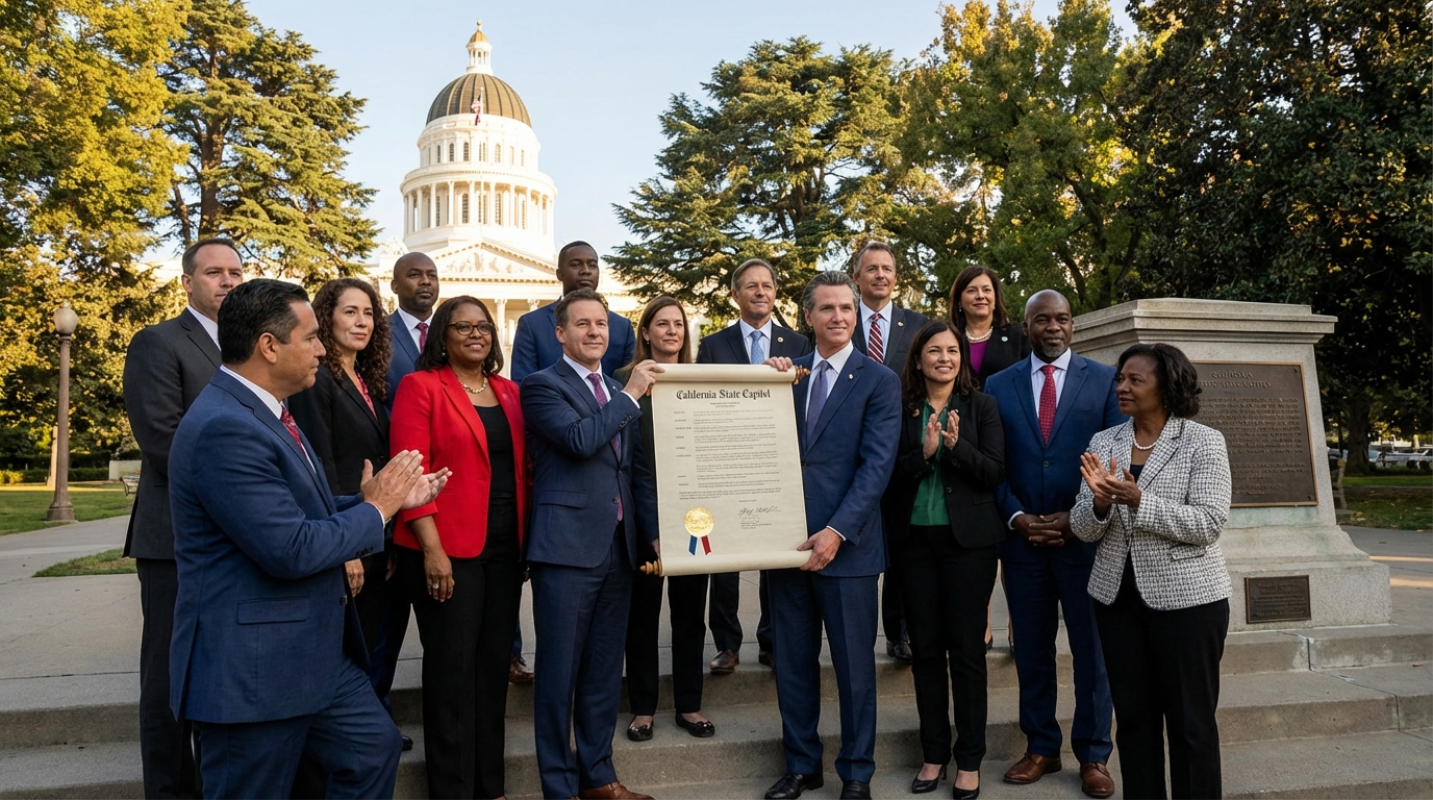
If you’re paying attention to history—or just California politics—you know that September 2024 marked a truly defining moment. That’s when Governor Gavin Newsom signed Assembly Bill 3089 (AB 3089), formally issuing the State of California’s official apology for its role in slavery and systemic discrimination.
Wait, California? A non-slave state? That's exactly why this apology is so important.
Although California entered the Union as a "free state" in 1850, it was anything but. The state government actively enforced fugitive slave laws and allowed more than 2,000 enslaved African people to be brought in and exploited between 1850 and 1860.¹ The state’s complicity didn’t end when the Civil War did; it simply morphed into decades of institutional racism, from restrictive covenants and redlining to unequal education and forced sterilization.
This law isn't just a feel-good resolution; it’s a legal acceptance of responsibility. We need to look closely at the details of the law, how it connects to the historic reparations movement, and what it means for the financial and legislative battles still ahead.
Details of the New Law
AB 3089, spearheaded by Assemblymember Reggie Jones-Sawyer, didn't emerge out of thin air. It was the direct result of the meticulous, multi-year research conducted by the California Reparations Task Force, which released its final report in 2023. The Task Force identified the formal apology as a important non-monetary step toward atonement.
So, what does the apology actually say?
The language is stark. It acknowledges that California "accepts responsibility for the role we played in promoting, helping, and permitting the institution of slavery, as well as its lasting legacy of persistent racial disparities." The law doesn’t shy away from naming the specific historical harms, including the state Supreme Court’s enforcement of fugitive slave laws and the systemic perpetuation of segregation and discrimination in housing and education.¹
Perhaps the most visible and lasting provision of the law is the mandate for a memorial plaque to be installed in the State Capitol Building. This isn't just a framed document tucked away in an archive. It’s a public, conspicuous display of the apology, making sure that the state's historical complicity is recognized by every visitor and lawmaker moving forward.
This action stands apart from previous, often vague, resolutions. This is a law, signed by the governor, establishing a permanent institutional marker of guilt. It forces the state to confront its past, not merely regret it.
The Reparations Task Force Mandate
The formal apology is merely Chapter 1 of the story. The real work—the repair—is contained within the 1,000-page final report of the Reparations Task Force. That document delivered 115 recommendations for restitution and atonement, covering everything from health harms and housing discrimination to political disenfranchisement.²
The Task Force didn't just suggest apologies; they put a dollar figure on the damage. Their economic experts calculated that a lifelong, 71-year-old resident could be eligible for an estimated $1.2 million in total compensation from combined harms, which included $13,619 for each year of residency based on the finding that Black Californians live 7.6 years less than their white counterparts.²
The passage of AB 3089 proves the state is willing to acknowledge the harm. But that’s only half the equation. Think of it this way: if you damage your neighbor’s car, the first thing you do is apologize. The second thing you do is pay for the repairs.
The formal apology is the necessary, non-monetary first step. It is the foundation that legitimizes the subsequent legislative push for material reparations. Without the apology, any financial or policy reparations might look like charity rather than deserved compensation. With the apology, they become necessary acts of repair.
Support, Skepticism, and Debate
The response to the apology law has been complex. Naturally, civil rights leaders and members of the Task Force celebrated the passage, viewing it as a long-overdue moment of truth. They see the plaque in the Capitol as a constant reminder that the state’s work isn’t done.
But there is also plenty of skepticism. Critics argue that an apology is the easiest, and cheapest, thing the state can do. If AB 3089 is the only reparations bill that passes, then the apology rings hollow. It becomes political theater designed to distract from the need for financial restitution.
The real test of sincerity arrived in early 2025 with the introduction of the California Legislative Black Caucus’s "Road to Repair 2025 Bill Package." This package directly addresses the Task Force’s recommendations, moving beyond words into policy.
Top Recommendations for Repair
- AB 7 Admission Preference for Descendants: This bill would permit state and private higher education institutions to consider providing preferential admissions to descendants of enslaved persons, addressing the legacy of unequal education.³
- AB 57 Home Purchase Assistance Program: This legislation intends to reserve a portion of Home Purchase Assistance Program funds specifically for descendants, a important step toward closing the housing wealth gap caused by redlining.
- AB 62 Compensation for Racially Motivated Eminent Domain: This aims to help victims of racially motivated property takings seek the return of their land or financial compensation.
These bills are the important next stage. They show that the apology wasn't the end of the conversation; it was the necessary beginning.
The Ongoing Work of Reconciliation
California, being the first state to issue such a complete apology directly tied to a massive reparations study, has set a national precedent. When California acts, other states and the federal government pay attention.
The move puts immense pressure on Congress, where federal reparations discussions (like H.R. 40) often stall. If the Golden State—a major economic power that never formally seceded—is willing to acknowledge and apologize for its systemic racism, what excuse do states with deep histories of chattel slavery have for inaction?
The core principle here mirrors a simple lesson we learn early in life: first, acknowledge the harm and apologize, and then you have work to do to repair the damage and make amends.⁴
Sources:
1. California Task Force to Study and Develop Reparation Proposals for African Americans
https://oag.ca.gov/system/files/media/ch17-ca-reparations.pdf
2. California Reparations Task Force Final Report
https://sdvoice.info/reparation-is-due-california-task-force-delivers-115-recommendations-in-final-report/
3. California Legislative Black Caucus Announces 2025 Legislative Priorities
https://blackcaucus.legislature.ca.gov/news/california-legislative-black-caucus-announces-2025-legislative-priorities
4. Expert Opinion on Significance of Apology and Repair
https://www.youtube.com/watch?v=baVMCEuV0fE